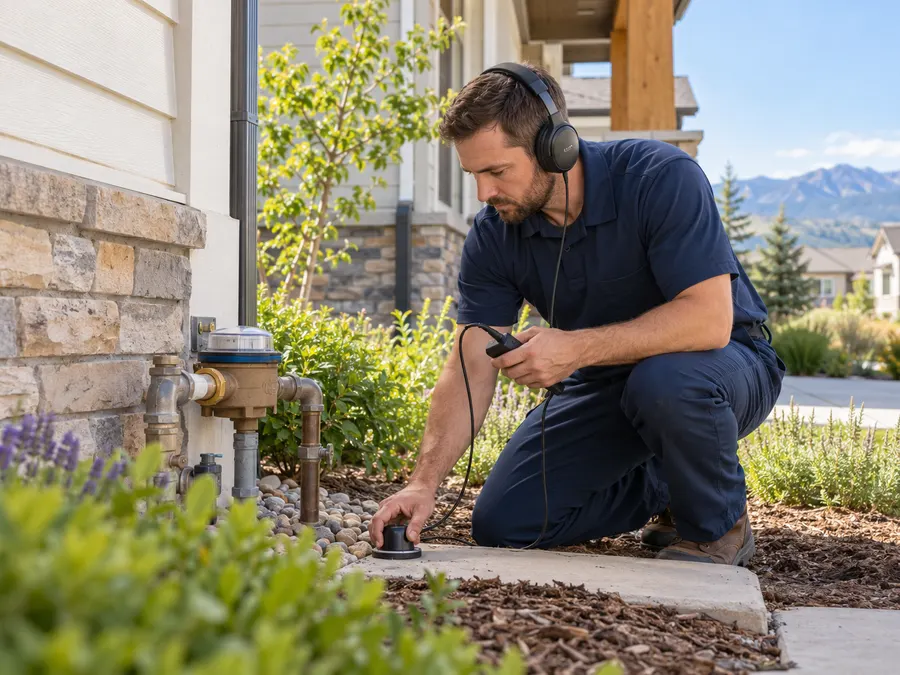
Hidden plumbing leaks aren't always obvious. Unexpected water use, damp flooring, running-water sounds, or unexplained moisture may point to a concealed problem. Call to connect with an independent plumbing service provider serving Erie and discuss professional leak detection options.
Independent service providers • Availability varies
Professional diagnosis may help narrow down a hidden source before repair decisions are made.
Start with what you've noticed
Not Sure Where the Water Is Coming From?
These signs can have more than one cause. A professional diagnosis may be needed to identify the source.
Unexpectedly high water bill
Running-water sound with fixtures off
Damp, warm, or discolored flooring
Wet areas near walls, yard, or foundation
Common warning signs
Signs You May Need Leak Detection
A concealed plumbing leak may show up through water use, sound, odor, staining, or moisture rather than an obvious stream of water. Look for patterns, especially when a symptom keeps returning or has no visible source.
Water meter registers use when fixtures are off
Sudden increase in water consumption
Musty or consistently damp odors
Staining on drywall or ceilings
Soft, cupped, or warped flooring
Unexplained warm spots on a floor
Water appearing near the foundation
Wet yard patches or moving-water sounds
Symptoms aren't proof by themselves. Condensation, drainage, irrigation, roof leaks, appliances, and ordinary fixture problems can look similar. Leak detection is useful because it helps separate likely plumbing problems from other possible causes.
One problem, several possible locations
Types of Hidden Leaks That May Need Investigation
You don't need to know the correct plumbing term before you call. Start with the symptoms you can observe; the suspected location can be narrowed down from there.
Type 01
Residential Leak Detection
This broad diagnostic category is for homeowners who know something is wrong but don't know where the water originates. The investigation may involve fixtures, supply piping, appliances, service lines, or concealed areas throughout the property.
Useful when symptoms don't point to one location
May combine several diagnostic methods
Type 02
Slab Leak Detection
Plumbing can sometimes leak beneath or within a concrete slab or foundation area. The goal is to narrow down whether water loss is occurring below a finished floor before selecting an access or repair approach.
Warm areas or sound beneath flooring
Unexplained moisture or continuous use
Type 03
Underground Water Leak Detection
Buried supply lines and other pressurized water piping around a home may leak without creating an obvious indoor stain. Investigation can help distinguish a buried line issue from irrigation, drainage, or surface water.
Unexplained wet ground or meter activity
High usage or reduced pressure
Type 04
Water Service Line Leak Detection
The water service line carries water toward the home's private plumbing from the public supply system. A suspected leak may need to be located before responsibility or repair options can be determined.
Ownership varies by location and line segment
Utility rules may affect responsibility
Type 05
Hidden Pipe Leak Detection
Water can escape from pipes concealed behind walls, above ceilings, below flooring, inside cabinets, or within other finished spaces. Careful locating may reduce unnecessary opening of materials.
Stains, odors, soft finishes, or recurring dampness
Symptoms may appear away from the actual source
The useful starting point
Describe the clue, not the diagnosis.
A meter that won't stop, a warm floor, or moisture beside a wall is enough information to begin a conversation with a provider.
Professional providers may use several methods to test a suspicion and narrow the search area. No single tool is right for every property or every leak.
The appropriate process depends on the suspected location, pipe material, property layout, observed symptoms, and equipment available to the provider. Thermal imaging, for example, can reveal temperature patterns that support an investigation; it does not literally see through a wall.
01
Visual inspection
Review visible piping, fixtures, stains, surfaces, and exterior conditions for practical clues.
02
Water-meter observations
Compare meter activity with known water use and fixtures turned off when appropriate.
03
Pressure testing
Evaluate whether a section of plumbing maintains expected pressure under controlled conditions.
04
Acoustic listening
Listen for sound or vibration produced by pressurized water escaping from some types of pipe.
05
Moisture measurement
Compare material moisture readings to help trace the extent and direction of dampness.
06
Thermal imaging
Observe temperature differences that may be consistent with moving water or damp materials.
07
Line isolation
Separate portions of the plumbing system to determine which area may be losing water.
08
Other diagnostic methods
A provider may select additional non-destructive techniques based on the site and symptoms.
Local context, careful claims
Leak Detection for Erie Homeowners
Erie is a growing residential community in northern Colorado, spanning parts of Boulder County and Weld County. Homeowners may encounter leak concerns through unexpected water consumption, meter activity, unexplained moisture, underground supply-line issues, or ordinary plumbing failures.
Water-usage monitoring resources can help Erie residents notice unusual consumption patterns. A change in usage is a clue—not a diagnosis—so it helps to compare the pattern with irrigation, fixtures, appliances, and normal household activity.
Serving homeowner inquiries in Erie, CO 80516
1
Notice
Record when the usage, sound, moisture, or staining appears.
2
Compare
Rule out obvious fixtures, irrigation, appliances, and visible pipe leaks.
3
Investigate
If the cause remains unexplained, discuss diagnostic options with a provider.
A useful first clue
High Water Bill or Continuous Meter Activity?
A sudden increase in water use does not automatically mean there is an underground leak. Before assuming the source is hidden, compare the bill with common water users around the home.
Running toilets, dripping fixtures, irrigation schedules, water-using appliances, visible pipe leaks, seasonal watering, and changes in household activity can all affect consumption. Some causes are intermittent, so a quick visual check may not tell the whole story.
If obvious fixtures have been checked and usage remains unexplained—or the meter continues to register flow when no water should be running—professional plumbing leak detection may help narrow down the source.
Common places to check
Toilets and faucets
Irrigation schedules
Water heater area
Dishwasher and laundry
Outdoor hose connections
Visible supply piping
Only inspect areas that are safe and accessible. Avoid wet electrical areas, unstable surfaces, and unnecessary removal of finished materials.
Symptoms can overlap
Where Could the Leak Be?
You don't need to decide whether the problem is inside, under the floor, or outdoors before calling. These categories simply help organize the clues.
Inside the Home
Wall or ceiling staining
Cabinet moisture or musty odor
Soft flooring near fixtures
Water can travel along framing and surfaces, so the visible spot may not be the source.
Under the Slab or Floor
Warm or damp floor areas
Sound below finished flooring
Meter activity without visible water
Foundation and piping layouts vary. These signs do not confirm a slab leak by themselves.
Outside / Underground
Persistently wet ground
Service-line or yard-line concerns
High usage or lower pressure
Irrigation, drainage, and weather can create similar outdoor clues.
Not Sure Where the Leak Is Coming From?
You do not need to diagnose the problem yourself. Describe what you're seeing, hearing, or noticing with your water usage when you call.
Independent providers serving Erie, CO. Availability varies by provider.
Diagnosis before decisions
Finding the Leak Comes Before Choosing the Repair
Leak detection is intended to identify or narrow down the source of suspected water loss. Once the location and cause are better understood, the repair approach can be selected with more useful information.
The appropriate work may be minor or extensive depending on what is found, how the piping is routed, and what must be accessed. Detection and repair may be priced separately, and not every provider offers every repair method.
Potential outcomes after diagnosis
Fixture repair
Pipe section repair
Water service-line repair
Pipe rerouting
Partial or broader repiping
Other plumbing work
Ask the provider to explain what was found, what work is proposed, what is included in the price, and whether surface restoration is part of the scope.
Practical next steps
When It Makes Sense to Get Help
If a water-related symptom continues and the source is not visible, an informed investigation can be more useful than guessing or opening finishes at random.
1
The meter continues moving despite fixtures being off
2
The water bill rises without a clear change in use
3
Moisture returns after the area has dried
4
Water appears but the source is not visible
5
The suspected pipe is beneath flooring or underground
6
Another contractor recommends specialized leak locating
A simple connection process
How It Works
The call helps start a conversation with an independent provider. Service availability varies, and all job-specific details should be confirmed directly.
STEP 01→
Call
Briefly describe the leak signs, moisture, sounds, or unexplained water usage you've noticed.
STEP 02→
Connect
The service helps connect you with an independent plumbing service provider that may serve Erie.
STEP 03
Discuss the Job
Confirm availability, diagnosis, pricing, scheduling, licensing, insurance, and service details directly with the provider.
Clear answers before you call
Leak Detection FAQ
These answers offer a practical starting point. Property conditions, utility rules, diagnostic methods, and repair scopes vary.
What does leak detection involve?
Leak detection is the process of investigating a suspected water loss and narrowing down where it originates. A provider may review visible conditions, observe the water meter, test pressure, listen for sound, measure moisture, isolate sections of piping, or use thermal imaging when appropriate. The methods depend on the property and the suspected leak.
Can a plumber find a leak without opening walls?
Often, the investigation begins with non-destructive methods that can help narrow the search area before surfaces are opened. No method can guarantee that every leak will be found without access, and a small opening may still be needed to confirm the source or complete a repair.
How do I know if I have an underground water leak?
Possible clues include unexplained water-meter activity, persistently wet ground, a high water bill, lower pressure, or the sound of water near a buried line. Irrigation, drainage, weather, and other plumbing issues can create similar symptoms, so diagnosis matters.
What are common signs of a slab leak?
Warm floor areas, moisture beneath flooring, continuous meter activity, unexplained water use, or sound under a floor can justify further investigation. Those signs do not prove the leak is under a slab, and not every home has the same foundation or piping layout.
Can a high water bill mean I have a hidden leak?
It can, but higher usage may also come from toilets, faucets, irrigation, appliances, seasonal watering, or changes in household use. If common causes have been checked and the increase remains unexplained, professional leak detection may help narrow down the source.
What should I check before calling for leak detection?
Look for running toilets, dripping fixtures, irrigation problems, appliance leaks, and other visible water use. If it is safe to do so, note whether the water meter changes when fixtures and water-using appliances are off. Do not disturb wet electrical areas or remove finished surfaces yourself.
Does leak detection include the actual repair?
Not necessarily. Detection focuses on locating or narrowing down the suspected source. Repair is a separate scope that depends on what is found, and not every provider performs every kind of repair. Ask the provider what is included and how additional work will be priced.
Who is responsible for a leaking water service line?
Responsibility can depend on where the leak is located relative to the utility infrastructure, meter, private property, and local service rules. Confirm the exact location first, then check with the utility and service provider when responsibility is unclear.
Residential leak help
Need Help Locating a Suspected Water Leak in Erie?
If you're dealing with unexplained water usage, hidden moisture, or signs of a concealed plumbing leak, call to discuss the problem with an independent service provider serving Erie.